Puja Room
Free guide
About this page
General guide · not an audit
Paid reports: see Pricing

Vastu for Puja Room

Room
General guide
Free to read
About this guide
The cited verse places the Deva or puja apartment in the North-East. Use that as the traditional room preference, then choose a clean, accessible prayer area in the home you have. A shelf or small shrine can be arranged without rebuilding, while lamp safety, ventilation and the household’s practice remain practical priorities.
By the Vaastu World editorial team. Last updated 5 October 2026. Statements marked Source cite the classical verses and tables in our rule library; text marked Common practice is general Vastu practice. No named expert has signed off this guide.
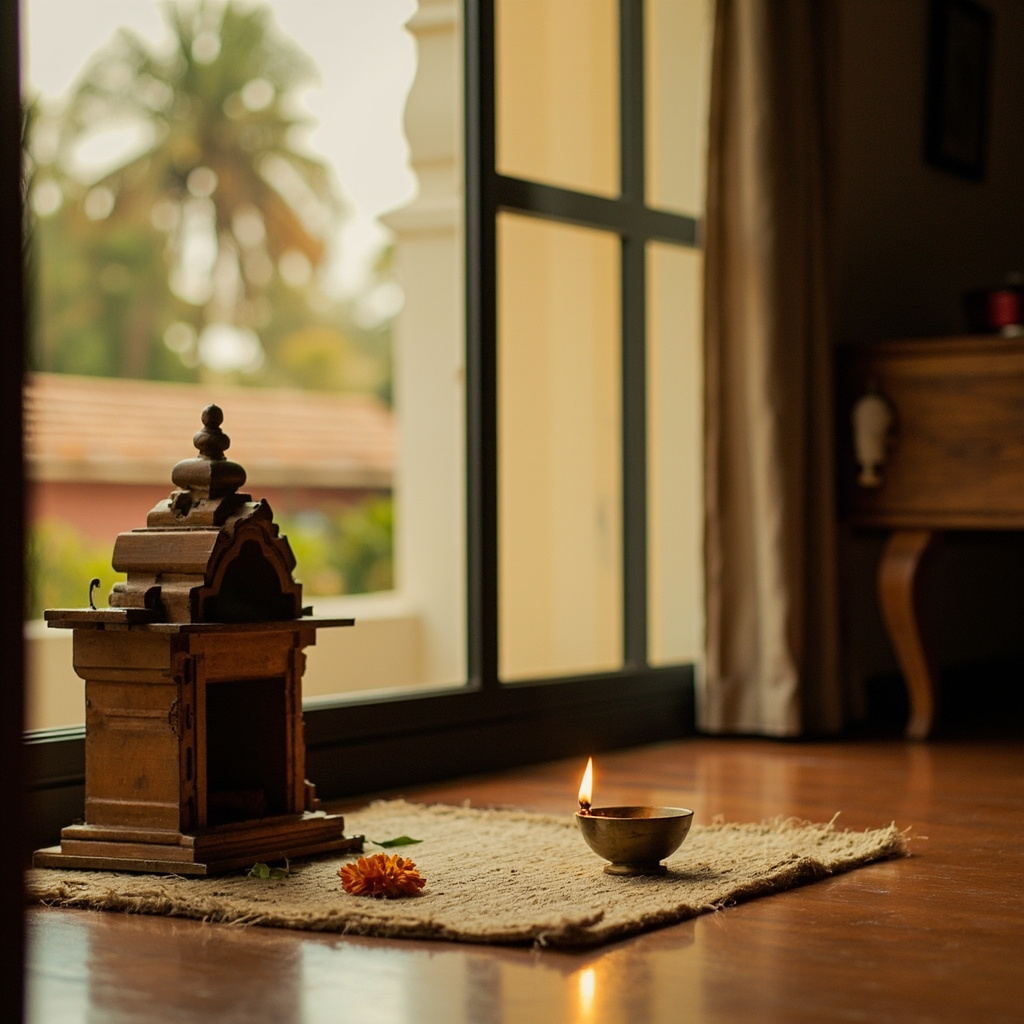
Vastu Tips for Puja Room — illustrative home interior

Guide details

Placement guidance

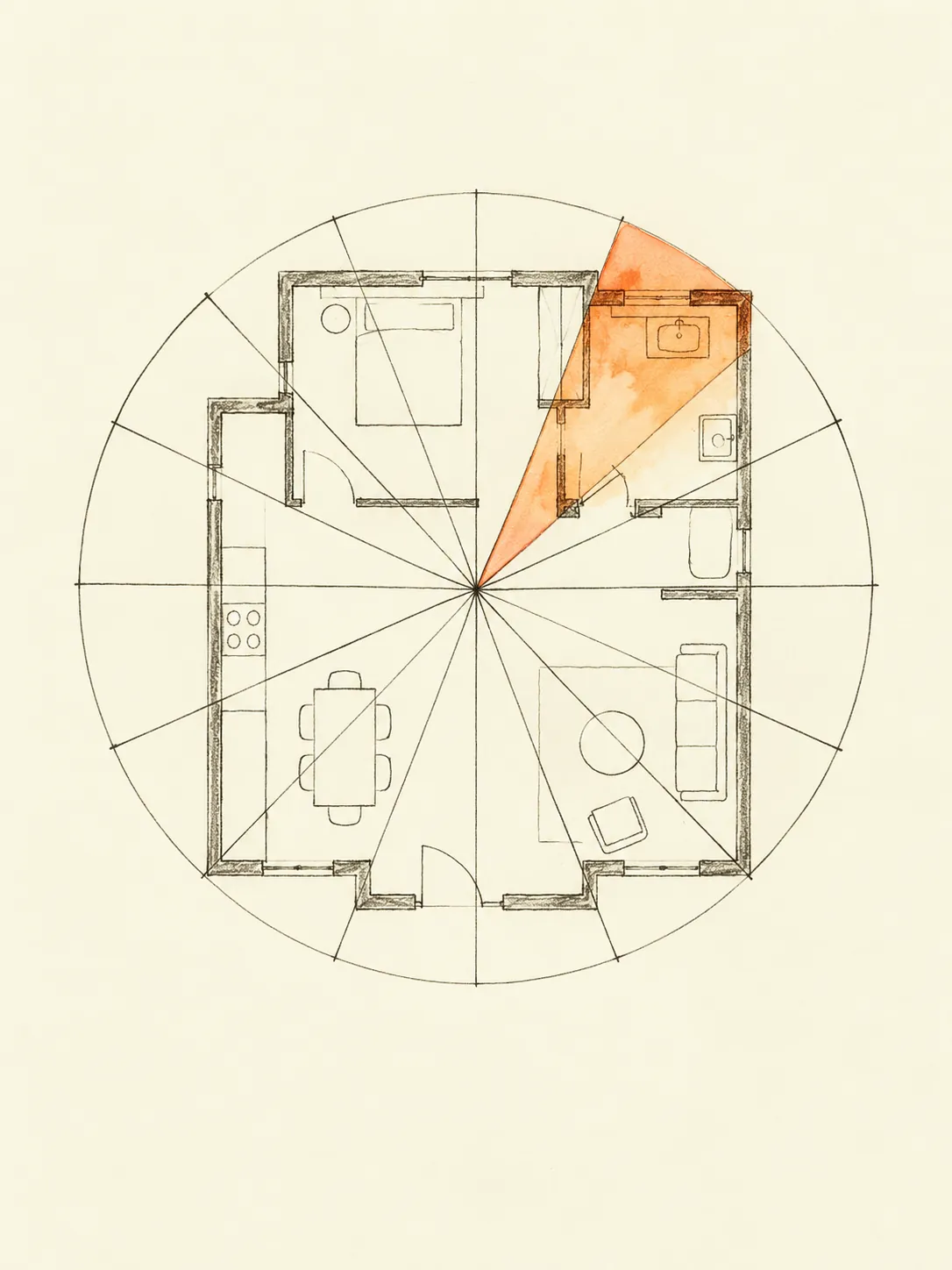
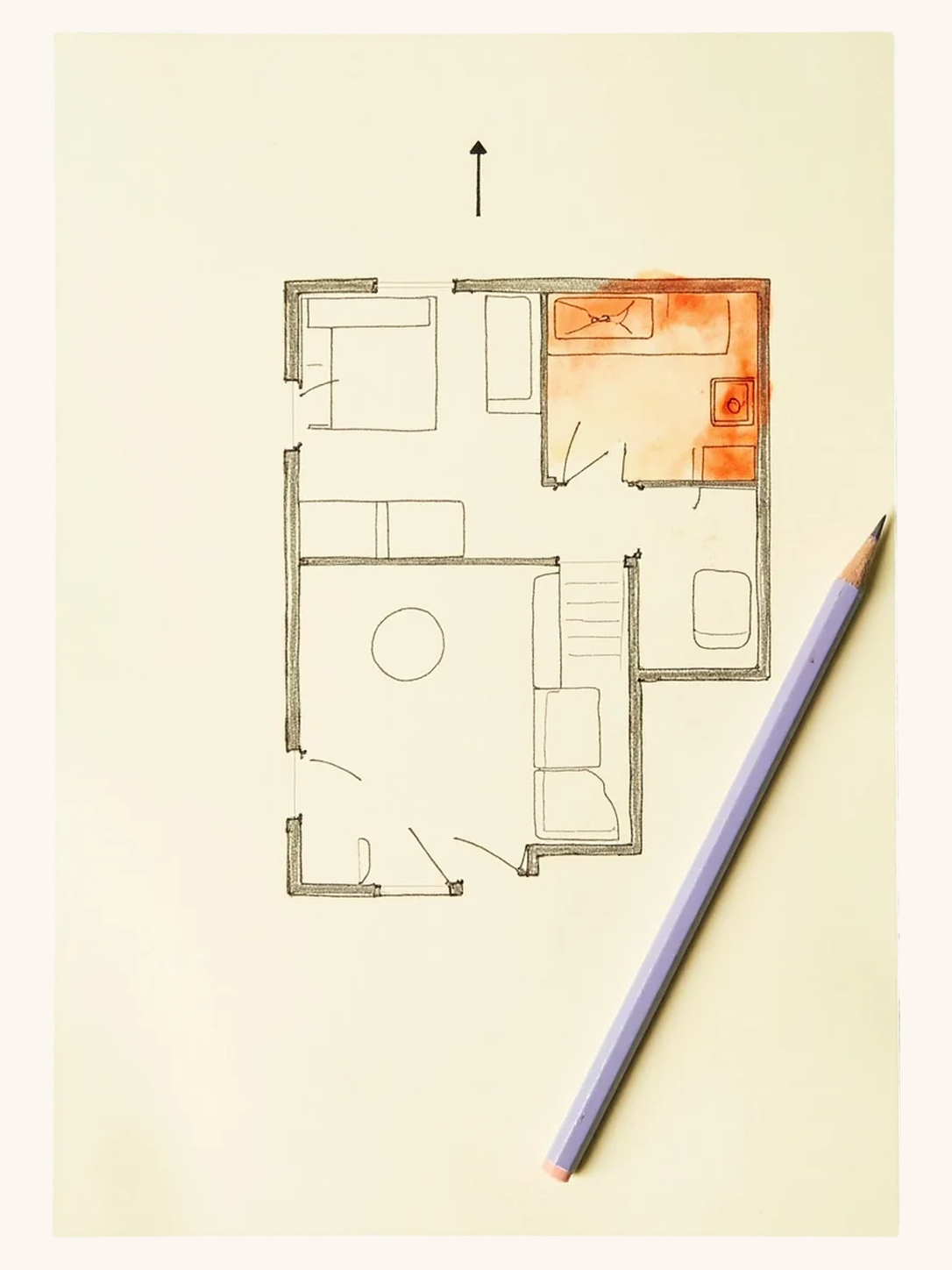
Common practice: Start with the outline of the home or premises you actually occupy. Mark the entrance and relevant room boundaries, then record how North was established. A magnetic reading is not automatically true north, and the top edge of a drawing is not proof of direction. Keep uncertain dimensions or bearings marked as uncertain. Use the same boundary and reference for every comparison; changing a drawing to obtain a preferred zone does not change the building. Measure furniture separately when the practical question concerns access or reorientation.

The verse places the apartment for the Devas in the north-east. This source states that function and direction; it does not prescribe modern appliances, furniture dimensions or predicted personal outcomes.

Source: Bṛhat Saṃhitā 53.118 (Iyer 1884, PD)

A shrine in the SW is commonly discouraged; the NE is the favoured place for worship.

Source: Modern Vāstu convention

A shrine in the South (Yama) is commonly discouraged.

Source: Modern Vāstu convention

Ideal placement and its limits

Common practice: North-East is the room direction expressly named in the verse cited below. It describes an apartment for worship, not the dimensions of a contemporary shrine cabinet. If the home has a separate prayer room, mark that room on the full plan. If prayer takes place at a shelf in the living room, record it as a prayer area rather than inventing a separate room. The traditional preference can inform planning while allowing the household to choose an accessible and respectful place for its own daily practice.

Acceptable arrangements in an existing home

Common practice: East or North are common alternatives when a North-East prayer room is unavailable. Label those choices as common practice unless using a specific cited table entry that states them. In a small flat, an uncluttered shelf may be more workable than a cabinet that narrows the passage. Think about who uses the space and whether they pray sitting or standing. Allow access to stored items without stretching over a lamp. The arrangement should fit the home's real rooms and the family tradition rather than a photograph copied at a different scale.

Placements to avoid

Common practice: The South and South-West cautions below are explicitly modern Vastu conventions. Preserve that qualification instead of assigning them a verse number. Practical arrangements to avoid include an open flame under a shelf, incense close to fabric and shrine doors that block circulation. If the space shares a room with other activities, keep the ritual items organized and the route clear. Do not close a ventilation opening, overload a wall shelf or create a fire risk in pursuit of a preferred direction. Keep symbolic arrangements alongside safe building practice.

Apply the guidance

Common practice: start with movable arrangements, record fixed constraints and assess each proposed change on its practical merits.
Read the guide
Common mistakes
Common practice: A frequent mistake is confusing the direction of the prayer room with the direction a person faces.
Common practice: Another is assuming all households follow identical rules for images, lamps and offerings. Use the family's own practice for those details rather than inventing a citation.
Common practice: Measure the shelf depth and available standing or sitting space. Check whether opening its doors clashes with nearby storage.
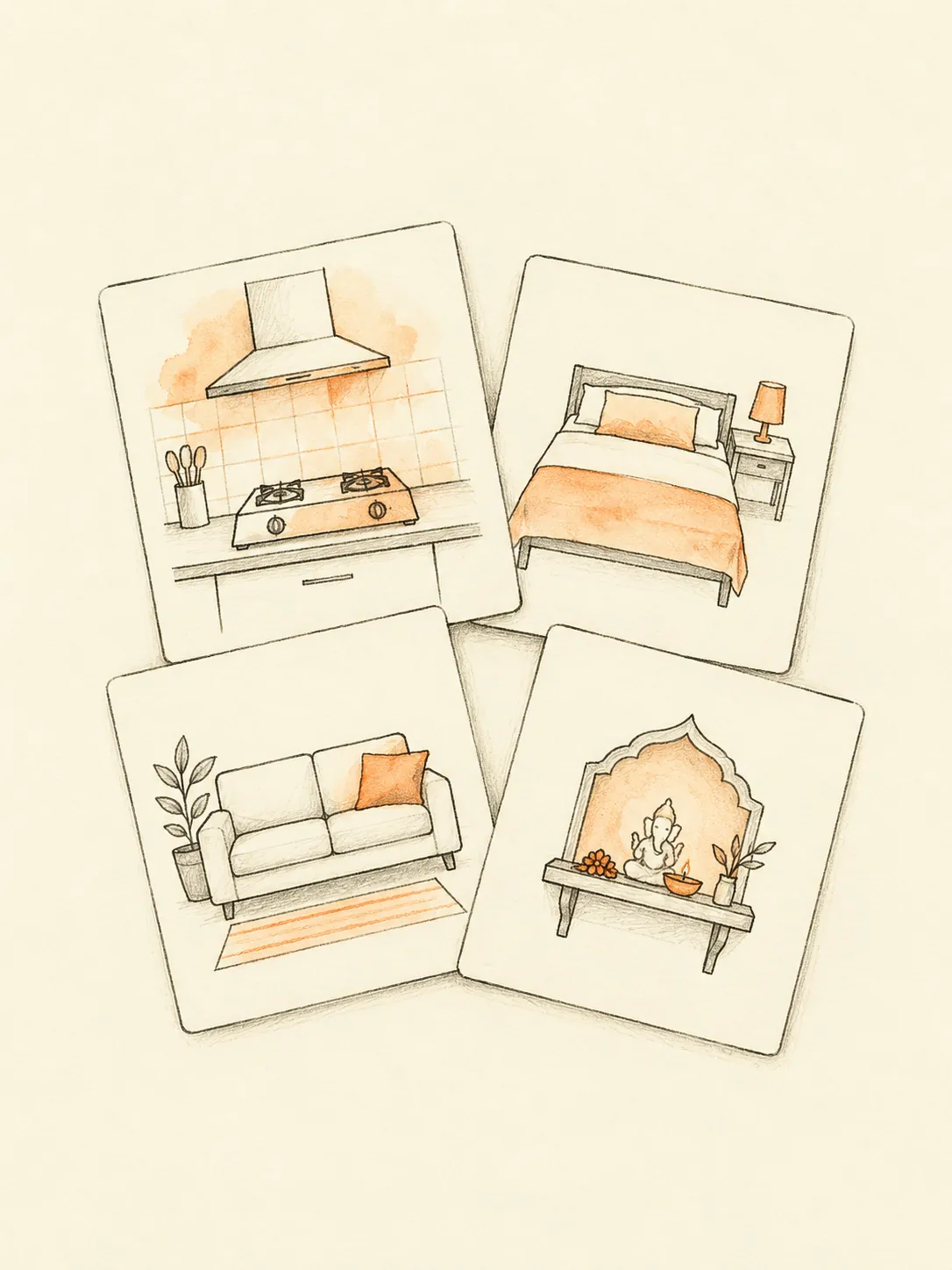
Common practice: Treat a decorative room image as an illustration. It cannot prove the north setting, the shrine's exact zone or how safely a lamp can be used there.
Remedies without demolition first
Common practice: Begin with cleaning and organizing the existing prayer area. Remove unrelated storage, place frequently used items within reach and choose a stable support for any permitted lamp.
Common practice: If moving a shelf is feasible, test its position with a temporary marker before drilling. A quiet part of a shared room can remain useful when no dedicated room exists.
Common practice: Record the directional compromise plainly. Moving loose ritual items is a reversible choice; changing a wall, electrical connection or ventilation system needs the appropriate permission and professional assessment before work begins.
Use the guide with your own plan
Common practice: Use the Floor Plan Studio to mark the prayer room or prayer area as it actually exists. Include the kitchen and bathroom so their boundaries are clear rather than relying on an isolated close-up.
Common practice: Check the cited North-East room preference separately from questions about how the family conducts worship. Draw the available shelf or sitting area to scale and test access during the daily routine.
Common practice: Keep the small changes that help. Where the room cannot move, retain the fixed constraint and focus the next discussion on practical placement within it.

More tools
to try

Find north.
Review the guidance.

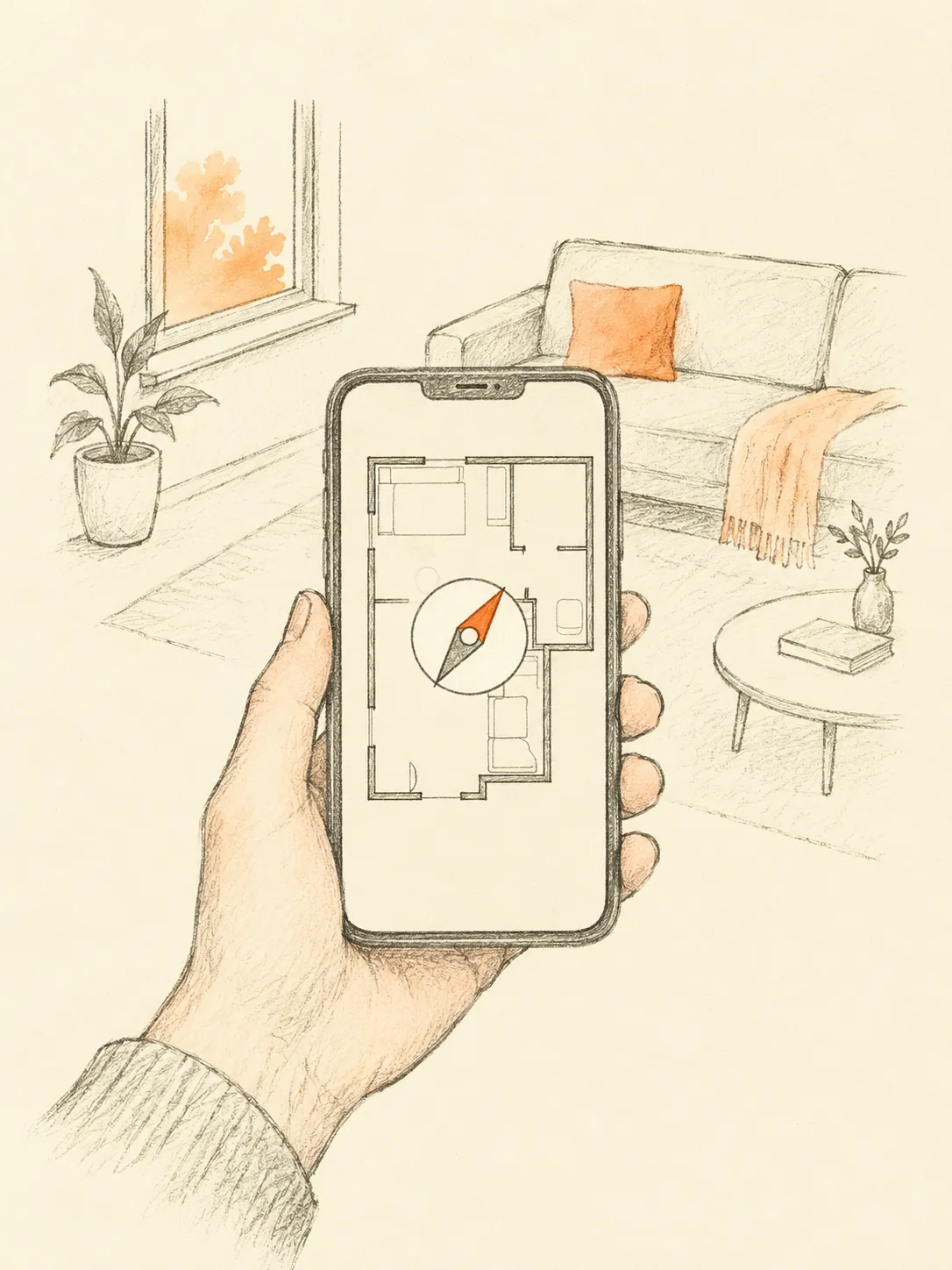
Every audit follows the same three steps, whether it runs from a phone compass or a traced floor plan. The method stays fixed so the result stays comparable from one home to the next.
Find north
By phone compass, AR, or a manual bearing.
Place the room
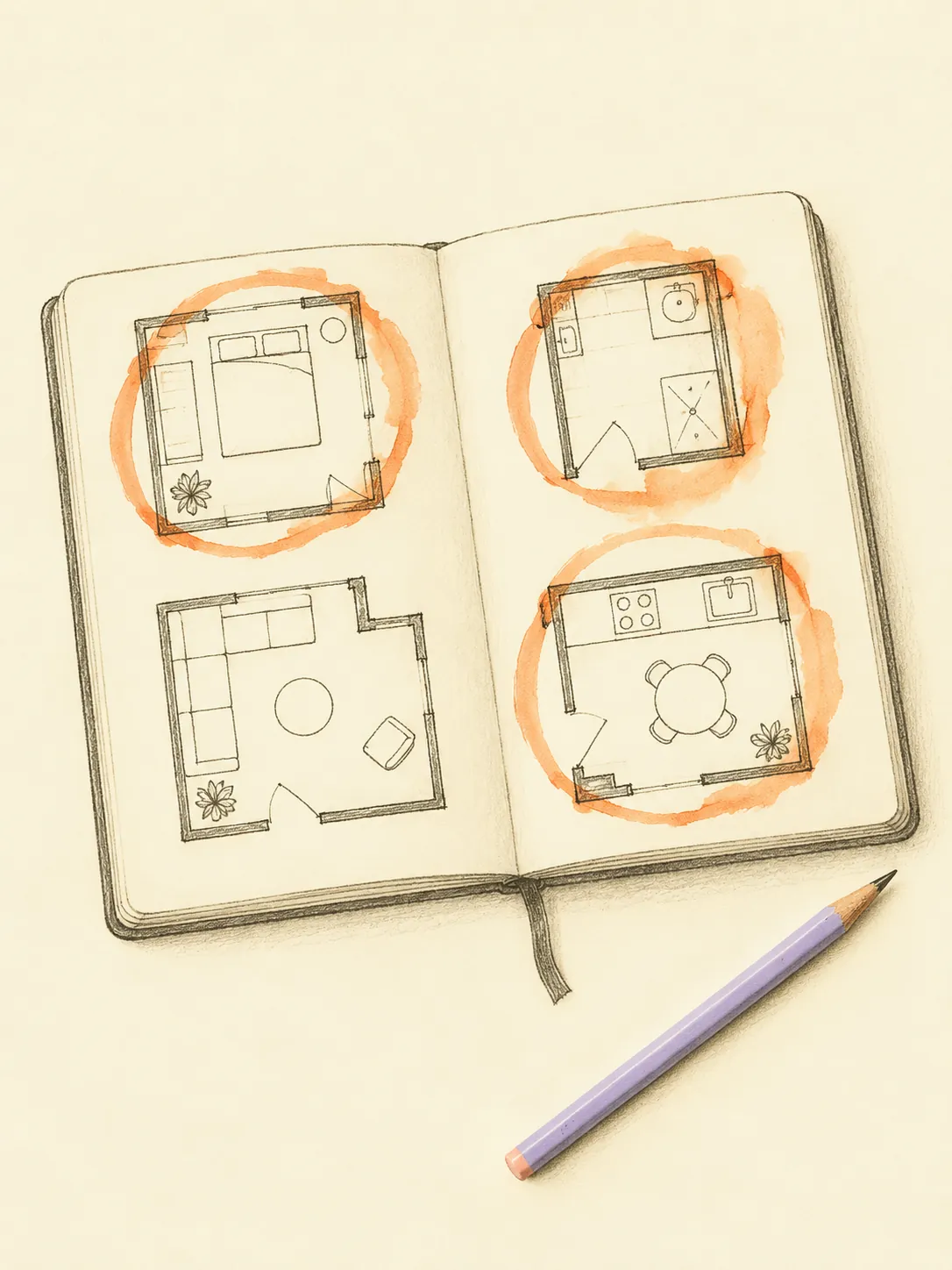
Drop each room onto the nine-zone plan.
Read the remedy
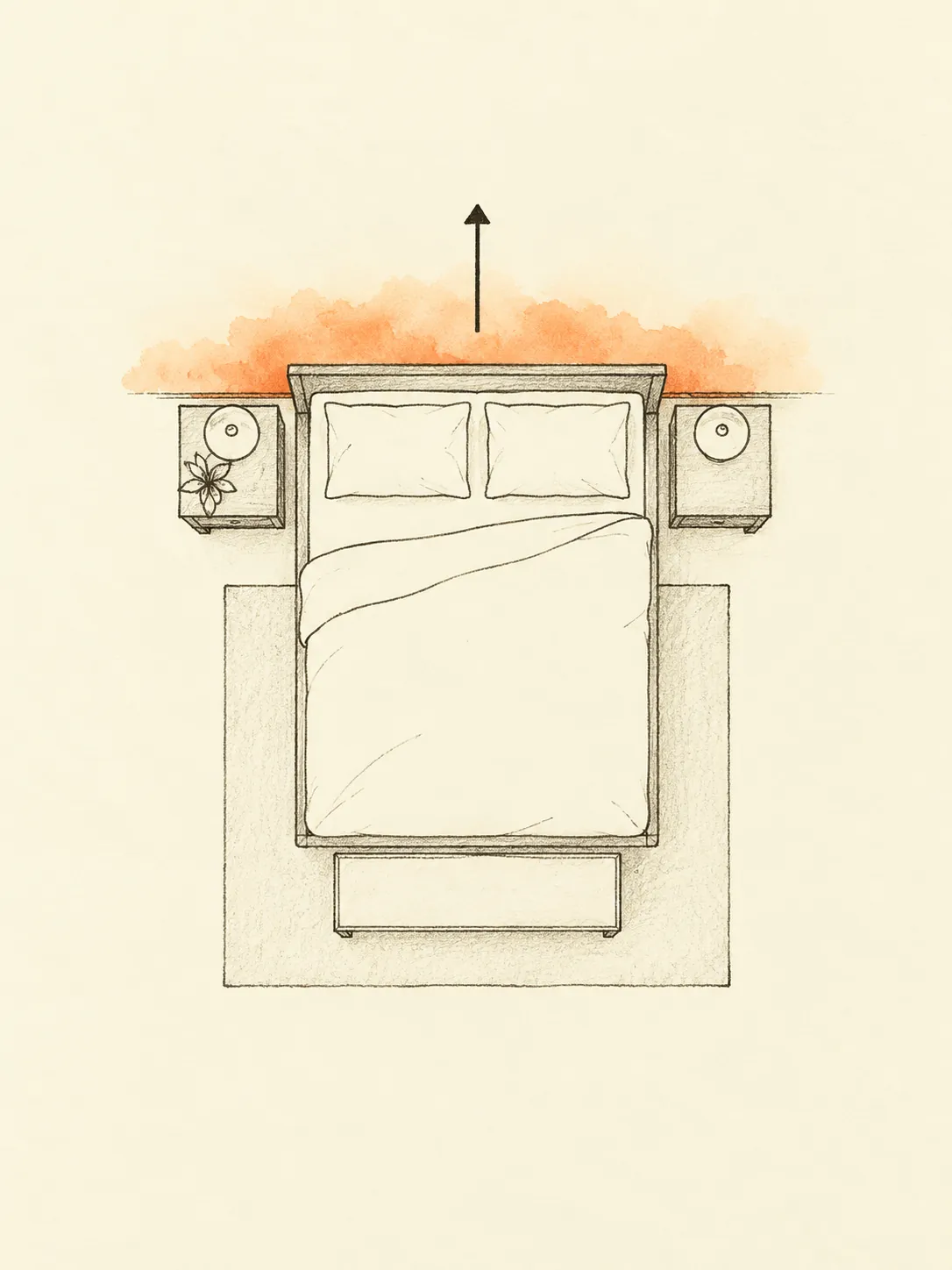
A placement reference and a practical next step.

Frequently asked
questions

Everything you might want to know before your first audit.
Didn’t find what you were
looking for?
Does the cited verse specify image height?

It names the room direction. Common practice: follow the household’s worship tradition and choose a stable, accessible shelf rather than claiming an uncited measurement.

Can a prayer shelf replace a separate room?

Common practice: a shelf can provide a workable prayer area. Describe it accurately on the plan; it does not turn the entire shared room into a dedicated puja apartment.

What if North-East is unavailable?

Common practice: use a respectful, accessible area that fits the home. Record the actual placement and its limits instead of assigning a new verse to an alternative.

Should lamps always be lit in a shrine cabinet?

Common practice: follow fire safety and the cabinet’s materials and clearance limits. A directional preference never establishes that an enclosed flame is safe.

Read the room.
Before you change it.
Illustrative open wooden front door with a marigold garland; not a measured assessment