Vastu for North-East Corner


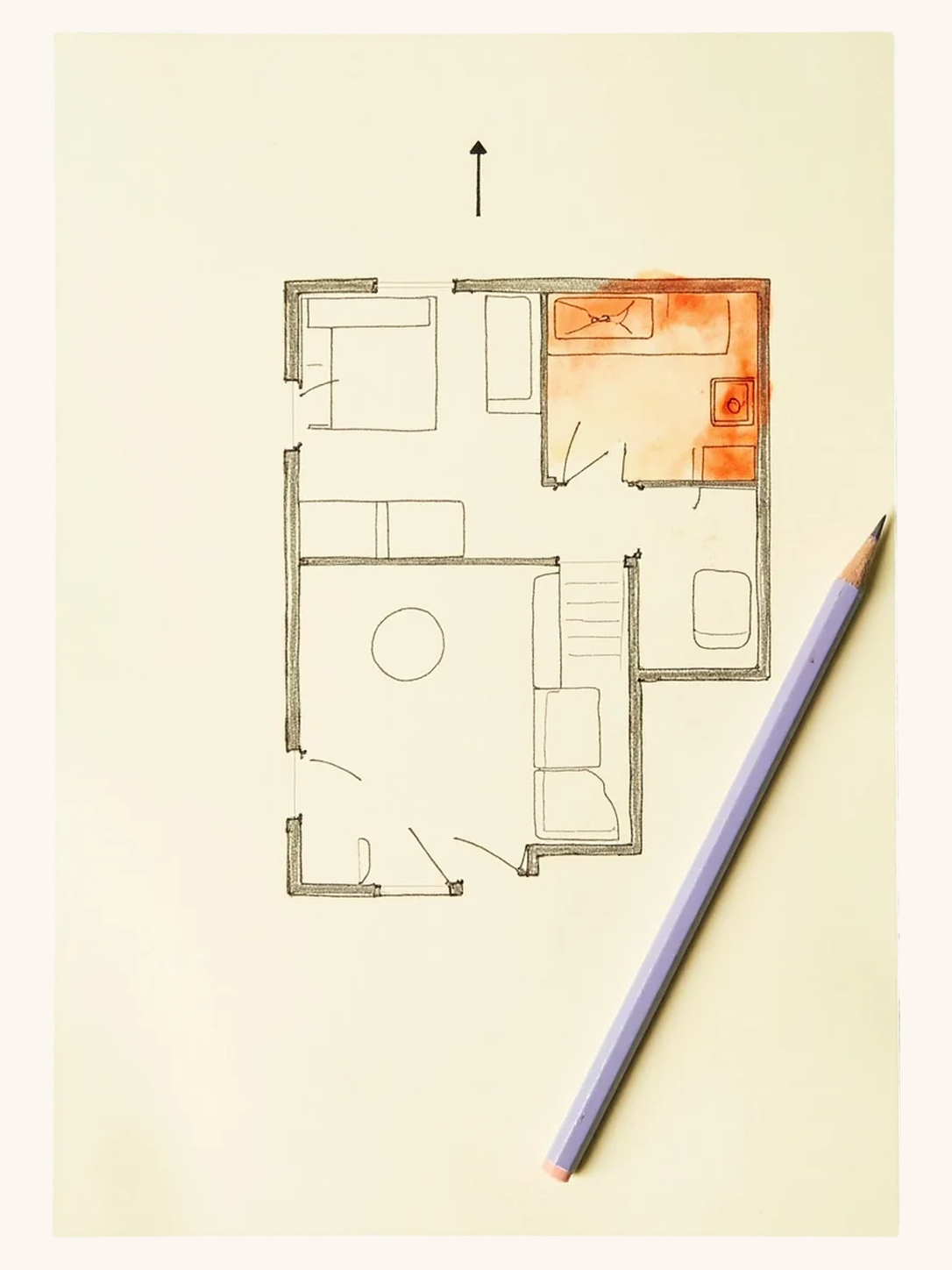
Guide details


Placement guidance
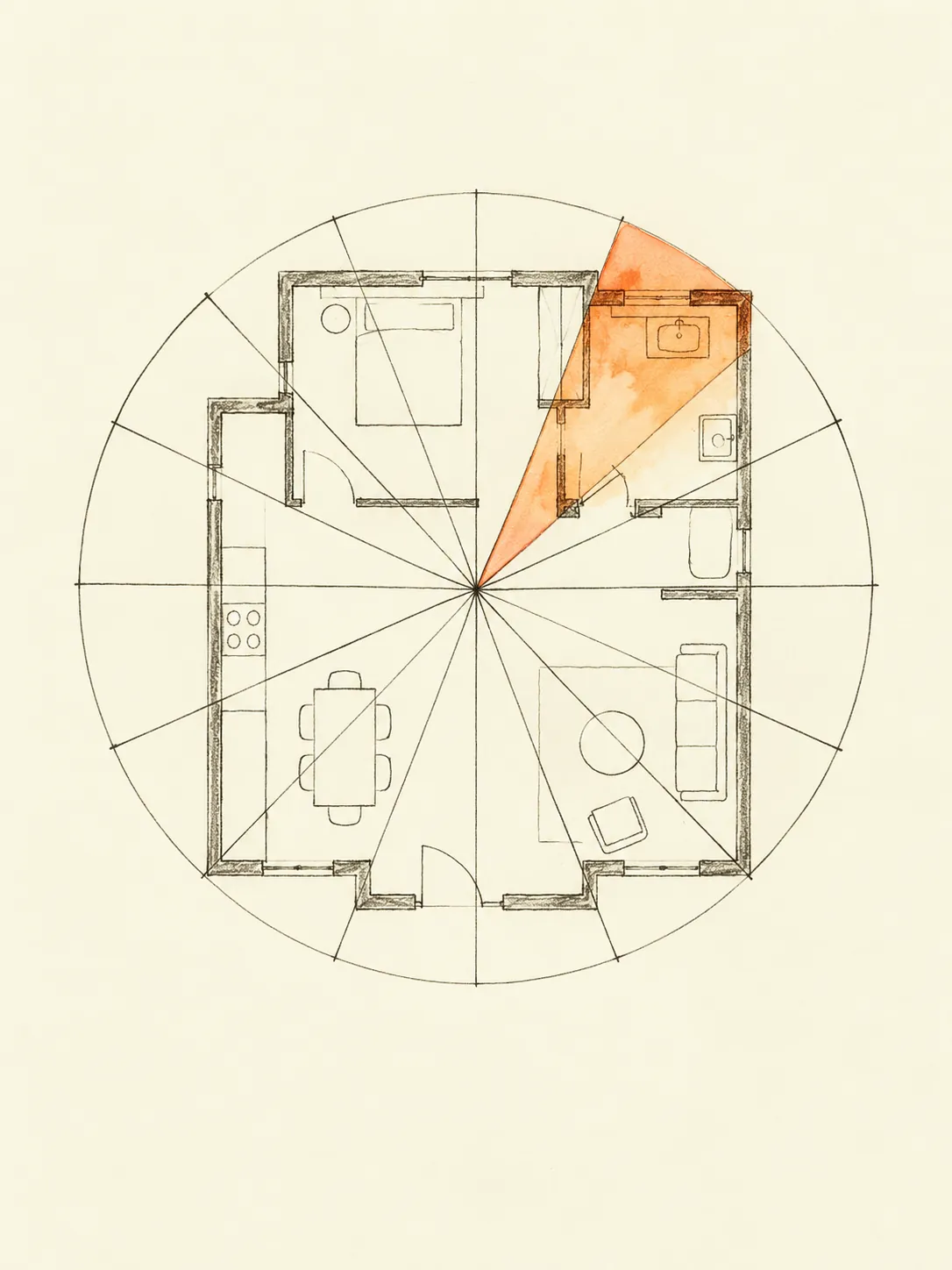
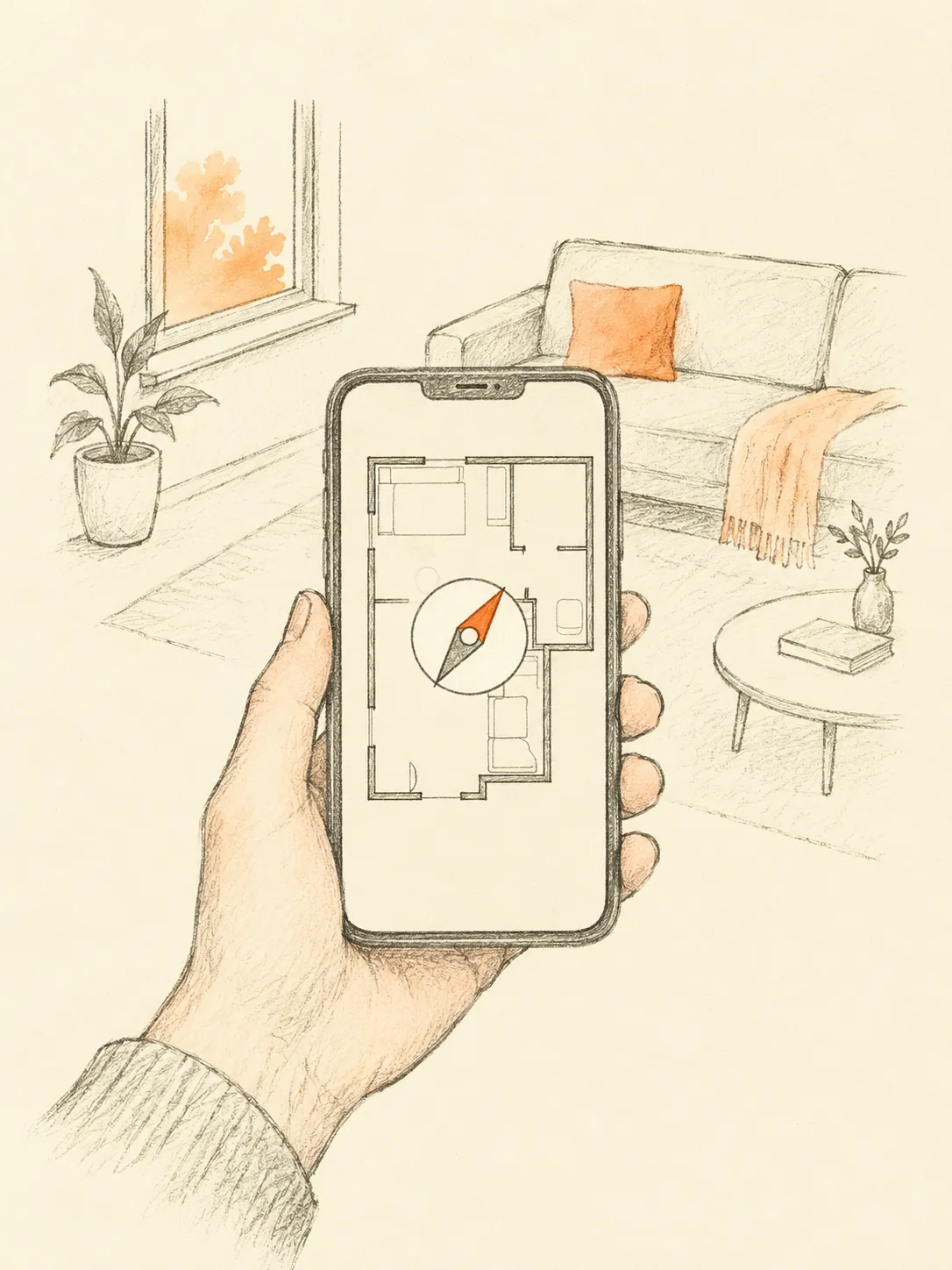
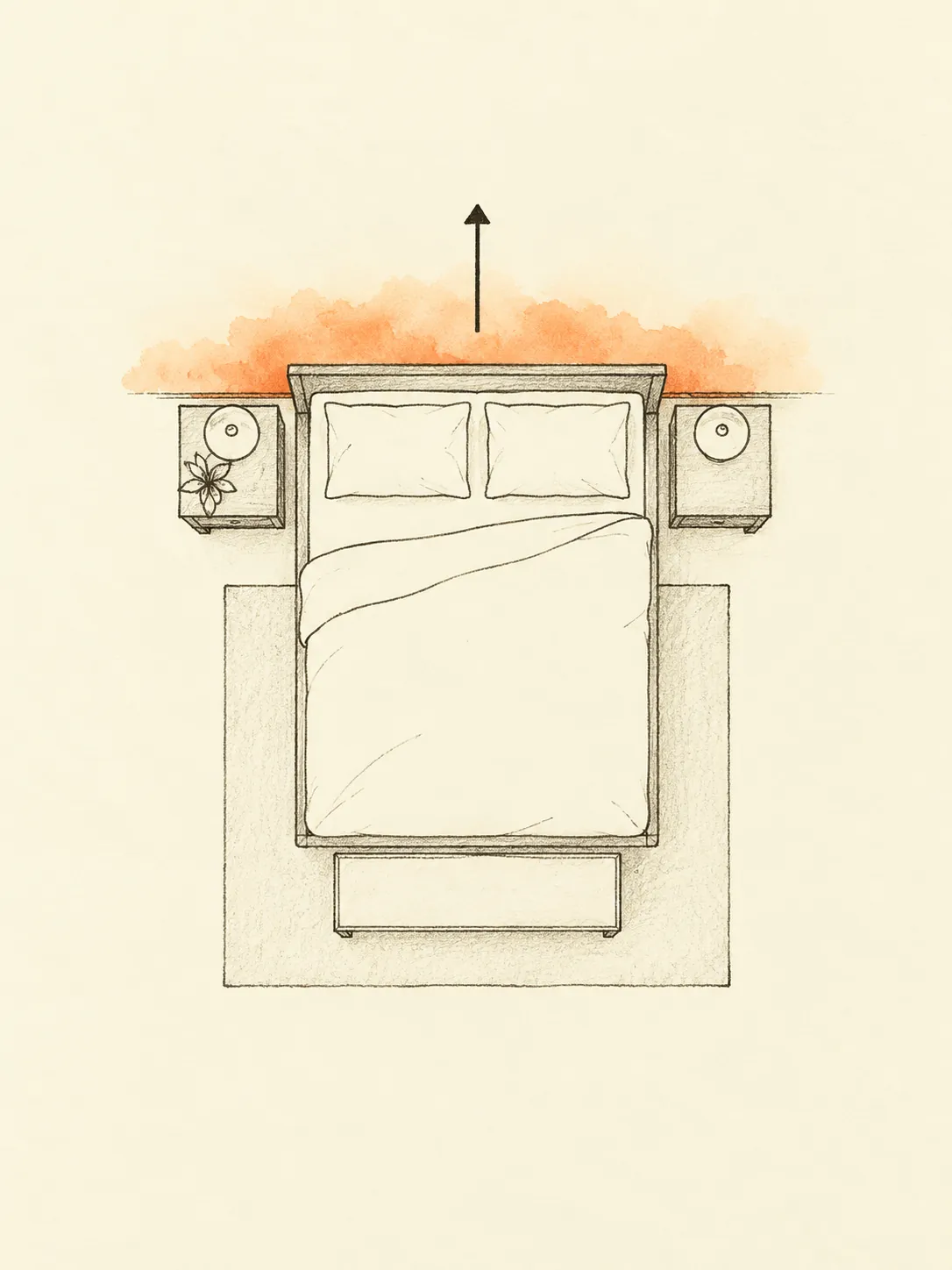
Common practice: Start with the outline of the home or premises you actually occupy. Mark the entrance and relevant room boundaries, then record how North was established. A magnetic reading is not automatically true north, and the top edge of a drawing is not proof of direction. Keep uncertain dimensions or bearings marked as uncertain. Use the same boundary and reference for every comparison; changing a drawing to obtain a preferred zone does not change the building. Measure furniture separately when the practical question concerns access or reorientation.
The verse places the apartment for the Devas in the north-east. This source states that function and direction; it does not prescribe modern appliances, furniture dimensions or predicted personal outcomes.
Source: Bṛhat Saṃhitā 53.118 (Iyer 1884, PD)
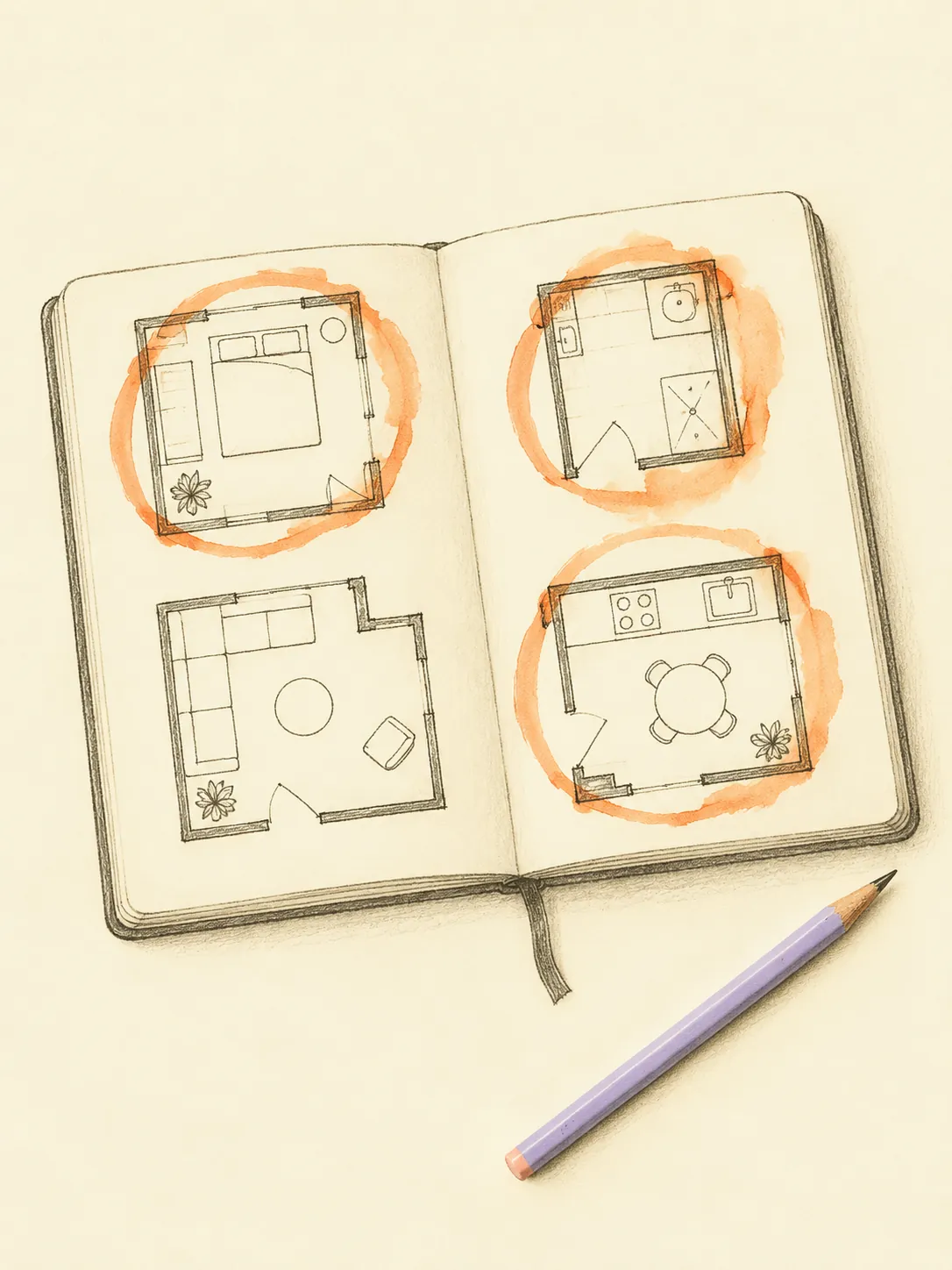
Heavy storage weighs down the light NE corner.
Source: Modern Vāstu — keep the NE light (after Manasara, Ch. 7)
Placing a toilet in the NE (Ishana) — the corner the texts keep purest and lightest — is the most-flagged Vāstu defect; this applies the classical purity principle to a modern attached toilet.
Source: Modern Vāstu — purity of the Ishana corner (after Manasara, Ch. 7)
Ideal placement and its limits
Common practice: The North-East prayer-room placement is stated in the cited verse below. The guide also applies a light-corner interpretation to heavy storage and modern fixtures. Keep those kinds of evidence distinct: a verse naming a prayer apartment does not itself prescribe every contemporary fitting. Mark the home boundary and verified North before locating the North-East zone. A corner of an individual room is not automatically the same feature. An ideal practical arrangement preserves useful space and access while allowing the household's real room functions to be described accurately.
Acceptable arrangements in an existing home
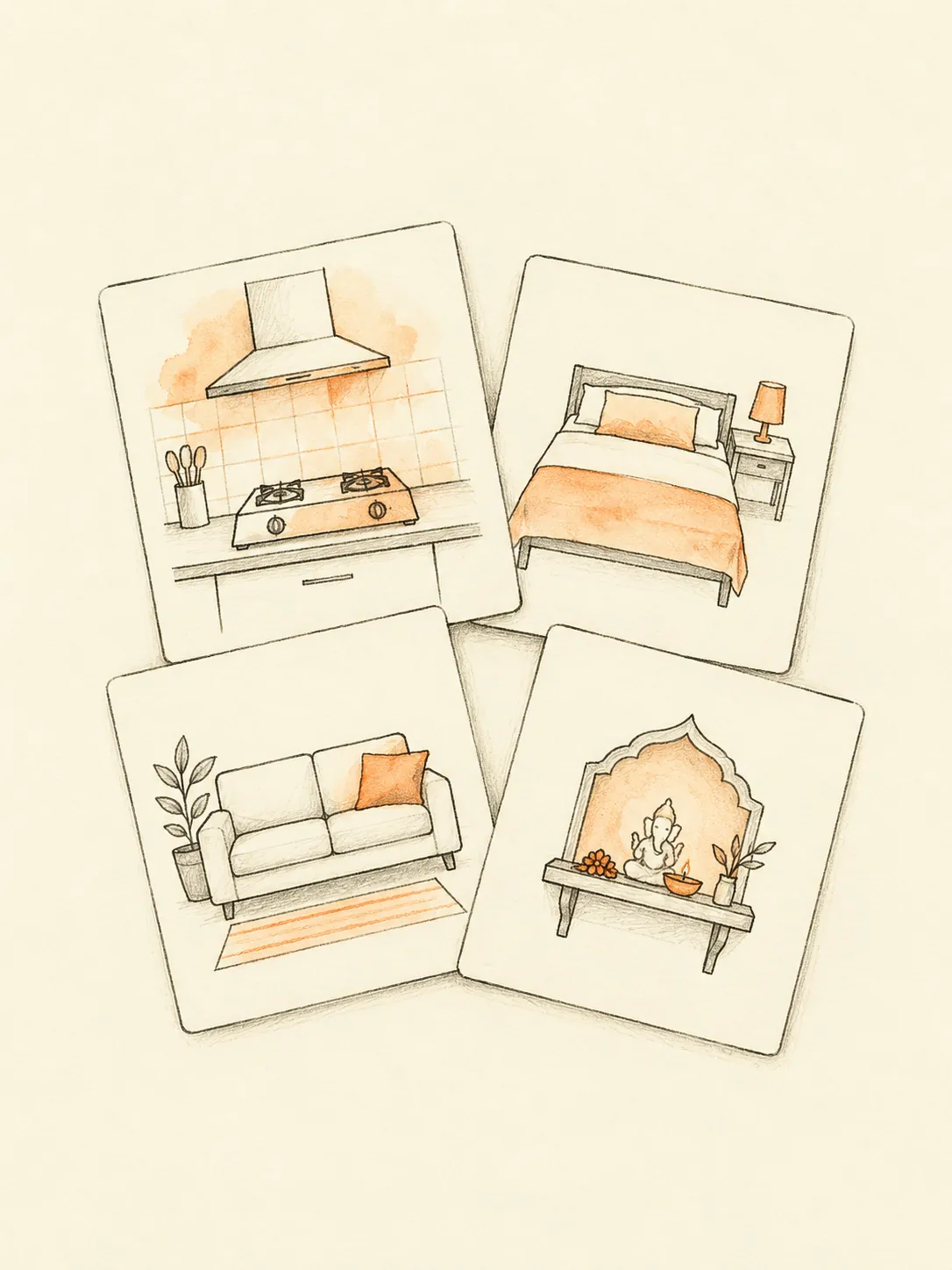
Common practice: A North-East area may be a living-space corner, balcony edge, study use or fixed room in an existing flat. Common practice is to work with its actual form rather than trying to turn every North-East corner into a separate shrine. A small prayer shelf can be considered where it is accessible and safe, while a study or seating area may need ordinary furniture planning. Do not exclude a fixed wet room from the footprint simply to make the zone look empty. An acceptable plan reading records what exists and its limits.
Placements to avoid
Common practice: The modern toilet finding below applies a purity principle to an attached toilet. Preserve that modern label instead of calling it a verse about current plumbing. Practical arrangements to avoid include heavy loose storage blocking a window, a prayer shelf beside unsafe flame clearances and a route narrowed by unused furniture. If a structural column occupies the area, do not remove it on the strength of a directional preference. Keeping a zone light concerns the interpretation of use and load; it does not override a building's support or required services.
Apply the guidance