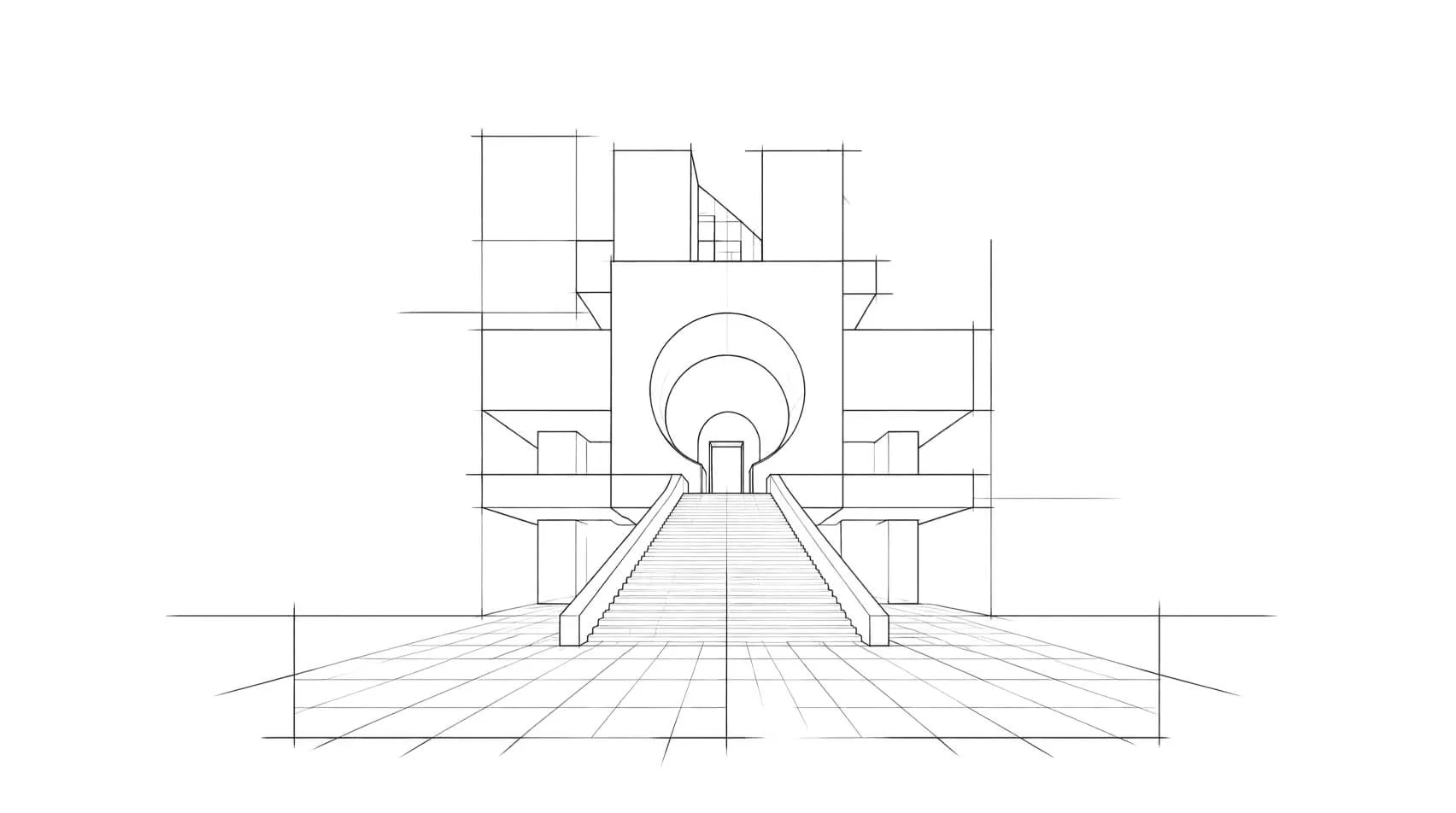

Keeping the Nine-Zone Grid Consistent Across Every Room
Almost every home starts with a reading. True north confirmed, the plot set against the nine-zone (navadisha) grid, each room assigned its direction — entrance, kitchen, bedrooms, water, the Brahmasthān at the centre. And almost every home drifts from that reading within a few years of moving in. The grid isn't the problem. The gap between having a reading and actually checking a room against it is.
Why the grid drifts, even with a clear north
A nine-zone reading is fixed at a point in time — the day the plot bearing was taken, by someone with the patience to lay the grid out carefully. The home, meanwhile, keeps changing: a guest room becomes a study, a balcony gets enclosed, a cupboard gets pushed against whichever wall has space that week. Rarely does anyone treat "re-check the room against the grid" as an actual step before any of that happens.
Drift doesn't happen because people reject Vastu. It happens because reconfirming a room against the grid takes a compass and a plan, and that's easy to skip when the renovation is closer than the direction check. Every individual decision to skip it feels reasonable in the moment. The sum of those decisions is a home that's drifted meaningfully from the reading it started with.
Where drift shows up first
Direction. This is almost always the first thing to slip, because small placement decisions happen constantly and rarely feel consequential individually. A stove turned a few degrees off true south-east because it sits easier against the wall, a bed pushed head-north for the view instead of head-south or head-east for rest.
Zone use. Classical guidance sets out which zone suits which activity, but holding to that in practice means someone has to notice when a kitchen migrates into the north-east because that's where the plumbing already runs. Without active checking, zone mismatches accumulate quietly.
The Brahmasthān. The centre of the home is meant to stay open. It tends to hold up reasonably well when a house is new, and collects a staircase, a pillar, or a heavy cupboard as renovations compress and shortcuts start feeling necessary.
Consistency as an ongoing process, not a one-time reading
The instinct when a home drifts from its reading is to treat it as a one-off fix — move the stove, shift the bed, call it done. This helps, briefly. It doesn't address the underlying issue, because the original reading was never the constraint. The constraint was always the lack of a way to check against it continuously, without that check depending on someone remembering to pull out a compass.
Homes that keep their grid consistent over years tend to treat it the way classical texts like the Brihat Samhita and the Manasara frame it: not a one-time gate at move-in, but a standing reference to check against whenever a room changes hands. The specific occasion varies — before a renovation, before a purchase, before converting a room's use — but the principle is the same. The grid has to be checked as a matter of course, not as a matter of who remembered to look.
What a consistent grid actually protects
The value of a consistent reading isn't decorative. A home that holds to its nine zones is genuinely easier to live in without friction, easier to hand to a new occupant with confidence, easier to extend later without contradicting itself, and less likely to produce the kind of small frictions that come from ambiguity — a kitchen fighting its own water zone, a main door that no longer matches the direction it was audited against.
None of this is about rigidity for its own sake. It's about making sure the reading a home was given actually shapes how it's lived in, rather than existing as a result everyone agrees with in principle and drifts from in practice. The gap between the two is closed not by taking a better reading, but by checking a room against the one that already exists — consistently, as the home changes, not just once at the start.




SEE WHAT VAASTU WORLD FINDS IN YOUR HOME